

A smarter path to controlled component refinishing.
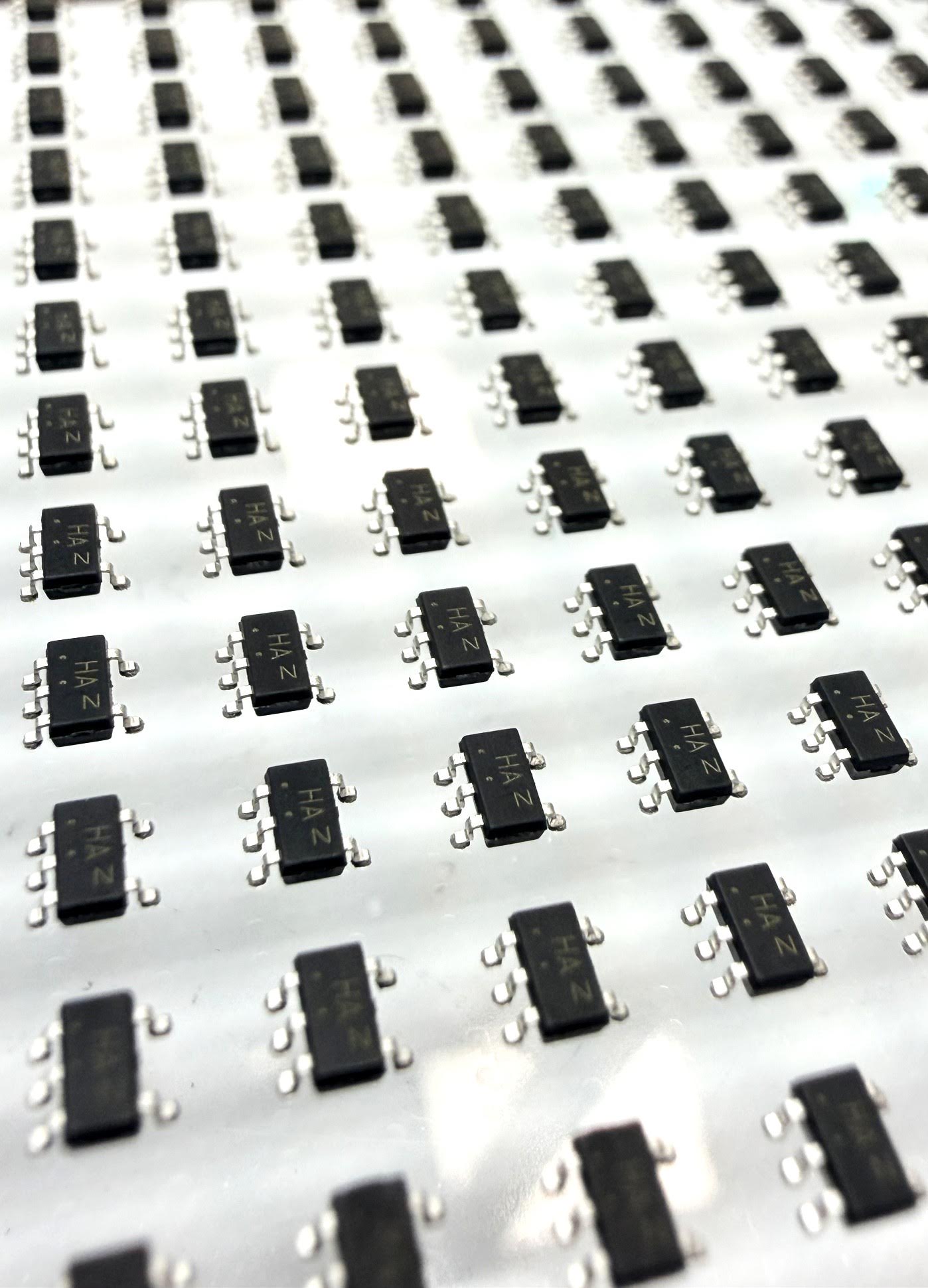
SemiPack’s Solder Paste Reflow (SPR) Tinning is a patent-pending approach to applying a tin-lead finish to electronic component terminations for tin-whisker risk mitigation.
Designed for today’s demanding electronic packages, SPR delivers a controlled, repeatable finish while avoiding the constraints that can come with conventional component-tinning approaches.
When the drawing calls for a proven finish conversion, and your program needs responsiveness, SPR gives you another path forward.
Why Programs Choose SPR
Controlled finish application
A purpose-built process provides a controlled approach to applying a tin-lead finish to component terminations.
Designed for repeatability
SemiPack develops and manages the process by component package type, supporting consistent results from development through production.
Strong fit for challenging packages
SPR is particularly valuable for package styles where coplanarity, solderability, and terminal geometry are important considerations.
Verified through advanced analysis
Finish composition and thickness are evaluated using standards-based XRF analysis, with statistical reporting available to support process evaluation.
Production-ready capability
SPR combines automated handling, controlled reflow, and engineering oversight to support both qualification activity and production demand.
Built for Challenging Components
Built for components conventional methods do not always handle well.
From miniature passive components to leaded and bottom-terminated packages, SemiPack evaluates each application for package construction, existing finish, desired outcome, and production requirements.
SPR has been developed for a broad range of component styles, including:
- Ceramic chip, ferrite, and tantalum components
- Leaded plastic packages
- QFN, DFN, SON, SOIC, SOT, QFP, PLCC, and TSOP packages
- Package sizes including 0402, 0603, 0805, and 1206
- Additional package types subject to application review
Every part number is different. SemiPack’s engineering team reviews compatibility before processing begins.
More Than a Tinning Service
A strategic capability.
Supply chains are under pressure to qualify reliable sources, solve obsolescence-related component concerns, and maintain production momentum without compromising quality.
SemiPack’s SPR Tinning capability gives component engineers, DMSMS teams, and program managers a differentiated option for component refinishing, backed by a quality-focused manufacturing operation, detailed process validation, and hands-on engineering support.
Have a part number in mind? Let’s determine whether SPR is the right fit.
Confidence Where It Counts
SemiPack uses standards-based XRF equipment to assess finish composition and thickness following processing. Additional validation techniques, including SEM, EDS, and elemental mapping, have supported SPR process qualification.
The result: a controlled, data-supported component-refinishing solution designed to help programs move forward with confidence.
Frequently Asked Questions
What is Solder Paste Reflow Tinning?
Solder Paste Reflow Tinning is SemiPack’s patent-pending component-refinishing process for applying a tin-lead finish to electronic component terminations.
What package types can be considered?
SemiPack supports a range of passive, leaded, and bottom-terminated packages. Compatibility depends on component construction, original finish, geometry, and program requirements.
How is the final finish evaluated?
SemiPack uses standards-based XRF analysis to evaluate finish composition and thickness. The final result depends on the component’s starting condition and application-specific requirements.
Can SPR be used for gold embrittlement risk mitigation?
No. SPR is not intended to remove existing plating and is not a process for gold embrittlement risk mitigation.
How do I begin?
Send SemiPack the component part number, package type, quantity, existing finish information, desired finish requirement, and delivery needs. Our team will evaluate the application and recommend the appropriate path.
Bring Us the Part Number. We’ll Bring the Process Expertise.
Whether you are evaluating a difficult package, qualifying an additional source, or responding to an urgent production requirement, SemiPack can help determine whether SPR Tinning is right for your application.
Contact SemiPack to discuss your application.
Semipack Services, Inc. processes and innovations are protected by U.S. and international patents and pending applications.
